
Modulating Social Behavior with Oxytocin: How does it work? What does it mean?
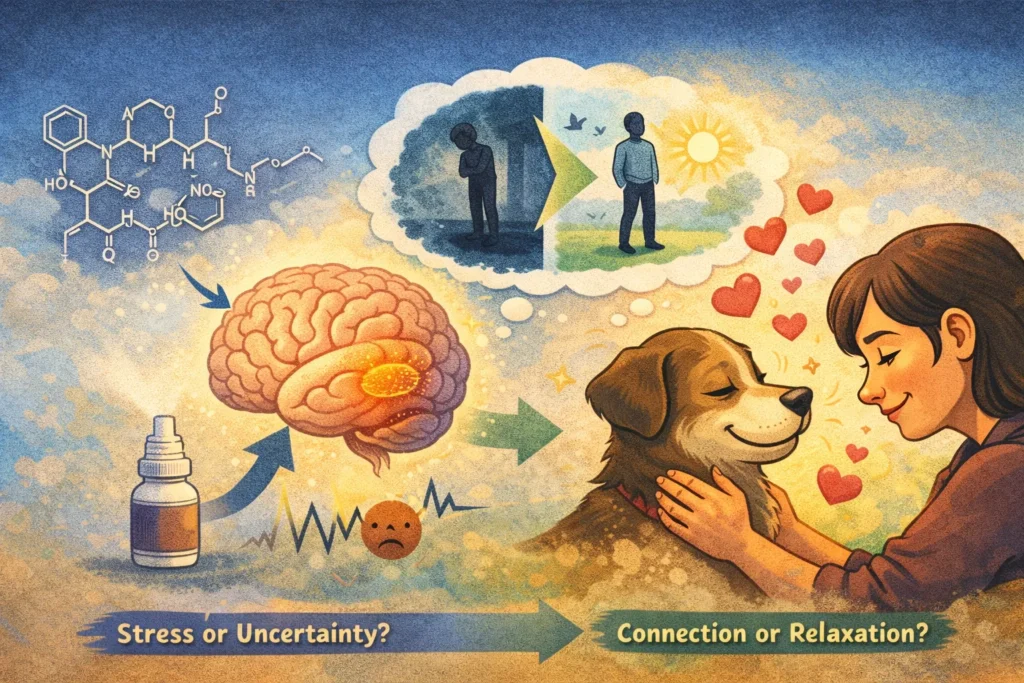
The paper "Modulating Social Behavior with Oxytocin: How does it work? What does it mean?" by Patricia Churchland and Piotr Winkielman delves into the role of oxytocin (OXT) in influencing social behavior.
Oxytocin, initially studied for its role in female reproduction (such as milk ejection and uterine contractions), has more recently been found to affect a range of social behaviors, including trust, generosity, and empathy. [Image of oxytocin molecule structure] This discovery has triggered a surge in research, but significant interpretational issues remain regarding how it actually works.
1. The "Love Hormone" Myth?
OXT has been linked to higher-order social behaviors like trust, generosity, and social recognition. Studies show that intranasal OXT administration can increase trust in economic games and enhance the perception of trustworthiness in strangers.
The Critique: However, the authors question whether OXT specifically targets these complex "high-level" social skills.
They argue that the broad anxiolytic (anxiety-reducing) effects of OXT could explain much of the observed social behavior. In other words, you might not be "trusting" more because of a specific trust chemical, but because your anxiety is lowered.
2. The Anxiety Connection
Research across species has demonstrated OXT’s anxiolytic effects. OXT can reduce physiological stress responses, such as those triggered by the hypothalamus (HPA axis).
In humans, OXT administration has been shown to reduce anxiety and fear responses, particularly by modulating activity in the amygdala (the brain's fear center). The authors suggest that reducing anxiety might make individuals more willing to interact socially, rather than OXT directly "creating" social cognition.
3. Peripheral vs. Central Effects
One of the biggest scientific headaches is measuring OXT:
- Production: OXT is produced both in the brain (Central) and in organs like the heart and gut (Peripheral).
- The Blood-Brain Barrier (BBB): OXT has poor penetration across the BBB. This means that measuring OXT in the blood (plasma) might not tell us what is happening in the brain.
4. The Nasal Spray Debate
Intranasal administration is a common method in human experiments because it is non-invasive. However, there are significant questions about whether and how OXT reaches the brain through this route.
While some studies suggest it reaches the cerebrospinal fluid (CSF), it remains unclear if it reaches the specific brain areas responsible for behavioral changes.
5. Clinical Applications (Autism & Schizophrenia)
OXT has shown potential in treating psychiatric disorders:
- Schizophrenia: Reducing positive symptoms like paranoia.
- Autism: Improving social deficits.
The authors note that these improvements might be due to OXT reducing anxiety and improving general motivation to affiliate, rather than "curing" the specific social cognitive deficits of these disorders.
Summary
The paper concludes by warning against oversimplifying Oxytocin as just a "social hormone."
Its primary value might lie in its role as a non-addictive anxiolytic (anxiety reducer). By lowering the barrier of fear and anxiety, social connection naturally follows. This is a crucial distinction for anyone interested in canine or human behavior.
Reference:
Churchland PS, Winkielman P. Modulating social behavior with oxytocin: how does it work? What does it mean? Horm Behav. 2012 Mar;61(3):392-9. doi: 10.1016/j.yhbeh.2011.12.003.